Siqi Li
PhD Student · UC Irvine EECS · AI Alignment, Robustness & VLA Systems

Engineering Hall 308
Irvine, CA 92697
"Used generative AI to turn myself into Link. Looks cool, but also a great reminder that AI reliability is still very much a problem."
Hi! I’m Siqi 👋
I work on AI robustness and alignment, with a particular interest in what happens when intelligent systems leave clean benchmarks and enter the real world.
My research asks a simple but uncomfortable question:
how do we know an AI system is doing the right thing when it fails quietly, faces distribution shift, or is intentionally attacked?
While much of robustness research is mathematical, I approach the problem both theoretically and engineering-first. I build systems, stress them, break them, and then ask what guarantees actually survive deployment.
I’m a PhD student in EECS at UC Irvine, advised by
Prof. Yasser Shoukry in the
Resilient Cyber-Physical Systems Lab.
Previously, I was a visiting researcher at Caltech, working with
Prof. John Doyle on language-to-robot control.
How I Think About Robustness
I’m especially interested in robustness for vision-language-action systems, where failures are subtle, delayed, and hard to detect.
My work spans:
- Formal and provable guarantees (e.g., adversarial detection with correctness proofs)
- System-level verification for VLA-based robot policies
- Engineering-heavy evaluation pipelines that expose real failure modes
I care less about making models look good on paper — and more about making failure visible, interpretable, and actionable.
Building Real Systems (and Breaking Them)
Beyond research prototypes, I enjoy building interactive systems that force models to operate under realistic constraints.
I’ve worked on:
- Language-to-robot control systems that integrate learning, planning, and feedback
- VR and game-like environments (including Meta Quest–style setups) to study perception, interaction, and failure in embodied agents
- Simulation-driven stress tests that reveal where “robust” models actually collapse
Game engines and VR are especially useful here — they let us design controlled worlds where failures are unavoidable, observable, and repeatable.
A Bit More About Me 🌍
I work fluently in three languages (Mandarin, English, and German), both conversationally and academically, and I’ve lived and studied across Asia, Europe, and the US.
I enjoy travel, food, and building things that work — which is probably why I’m drawn to problems where theory meets reality.
I believe the most interesting AI research is:
- rigorous but not fragile
- principled but hands-on
- serious, yet a little fun
If that resonates, feel free to reach out — I’m always happy to chat.
§1 Recent Updates
| Jan 15, 2025 | ICLR 2026 Submission — Submitted KoALA, our adversarial detection method with formal guarantees. We prove detection bounds for vision-language models under attack. |
|---|---|
| Nov 15, 2024 | EMNLP 2024 — Our paper on retrieval-augmented speech translation was accepted! Cross-modal retrieval improves rare word accuracy by 17.6%. |
| Sep 01, 2024 | Started my PhD at UC Irvine, joining the Resilient Cyber-Physical Systems Lab. Grateful for the Graduate Dean’s Recruitment Fellowship! |
§2 Selected Publications
- arXiv
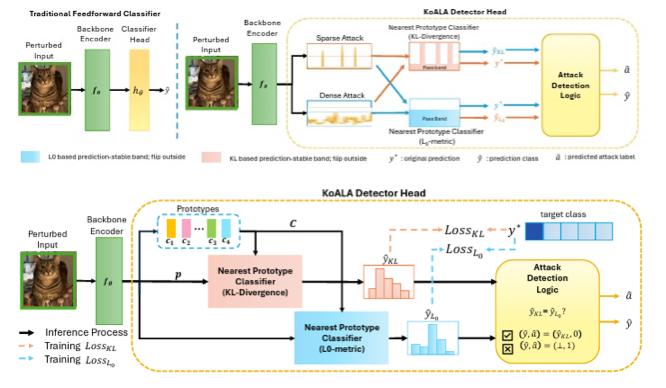 KoALA: KL-L0 Adversarial Detector via Label AgreementarXiv preprint arXiv:2510.12752, 2025Under review at ICLR 2026TL;DR: A provably-guaranteed adversarial detector combining KL divergence with L0-based similarity — flags inputs when two heads predict different labels.
 - EMNLP
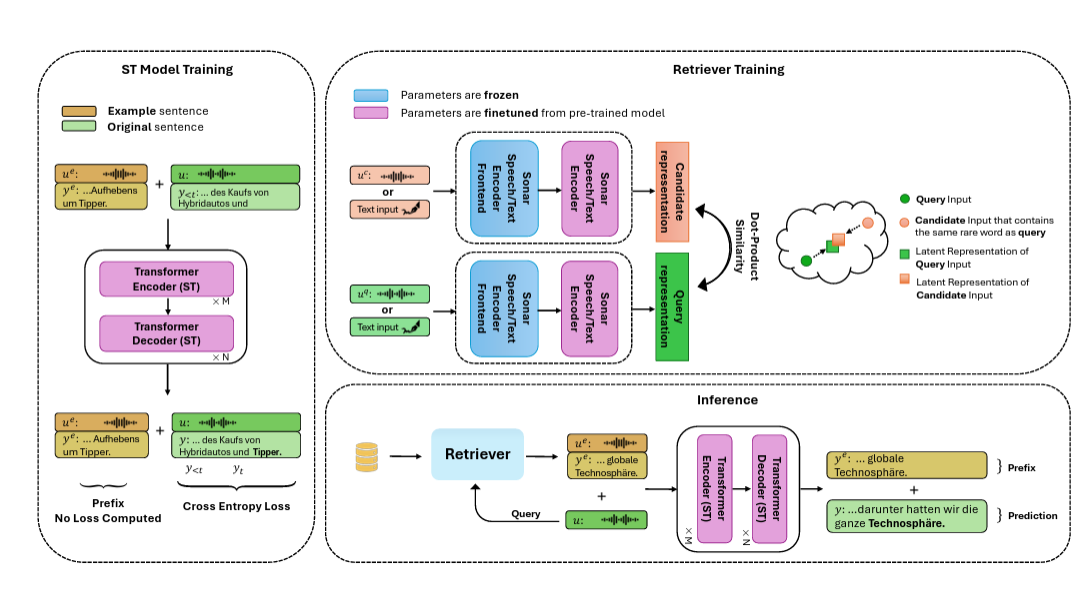 Optimizing Rare Word Accuracy in Direct Speech Translation with a Retrieval-and-Demonstration ApproachIn Proceedings of the 2024 Conference on Empirical Methods in Natural Language Processing, 2024TL;DR: Cross-modal retrieval enables speech translation models to look up rare words during inference, improving tail vocabulary accuracy by 17.6%.
 - CVCI
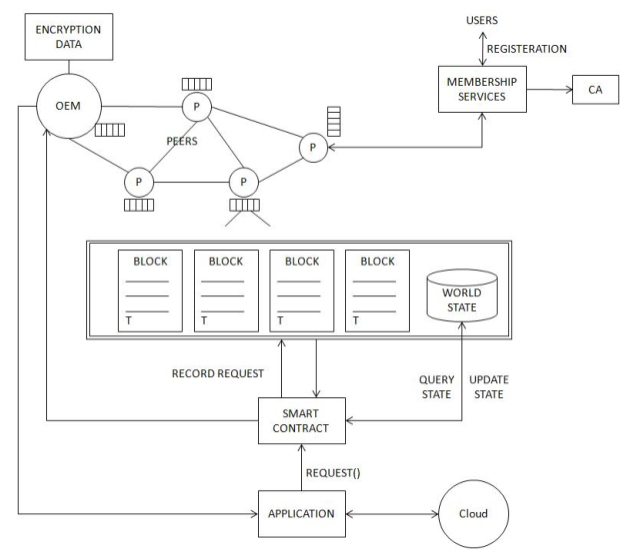 The Data Protection of Intelligent Connected Vehicles Cloud Control Framework Using Fully Homomorphic EncryptionIn 2020 4th CAA International Conference on Vehicular Control and Intelligence (CVCI), 2020Equal contributionTL;DR: Privacy-preserving cloud control for intelligent vehicles using fully homomorphic encryption.